2nd May (Fri)
Sent hubby to the airport before picking lil’ one up from school. Had a short in between time so brought lil’ one for lunch instead of rushing around the mall to pack food from various places. Although che-che worked from home today, she had her lunch at home.
Packed A Hot Hideout for dinner, the girls shared a collagen soup while I prefer the dry oriental stir fry.
Had to continue with the bomb shelter project. I bought the Ikea boxes on Wednesday, did nothing on Thursday (Labour Day) so had to do something today. If I had the plan to do a tiring job, I will not cook for sure. I’m not a superwoman. Spent about 2hrs after that taking my own sweet time packing. I’m losing my mojo as I begin to feel the tiredness, the frustration. With the most in momentum, I take short breaks in between to drown myself in cold water and stand infront of the table fan.
In the night, scanned some items into the laptop so I can junk them away. Clearing some music books and cooking books which I haven’t touched for more than a year.
3rd May (Sat)
Walked over to HM under the hot sun after doing our civic duty - casting our vote. Lil’ one wanted Macs, sadly it has closed its door for a mall revamp. We had our lunch in Ichiban Boshi instead..
Didn’t walk around the mall, we wanted to get home asap. In the first place I didn’t even want to go all the way to HM for lunch.
Lil’ one and I packed Subway for our dinner. Che-che may be going out with her friend for dinner after tennis. I wonder if she’s lost her tennis skill or will she be chasing after the ball 80% of the time? 😂
Another day where both meals are settled very easily. And I’m also glad I didn’t cook coz I was busy.
4th May (Sun)
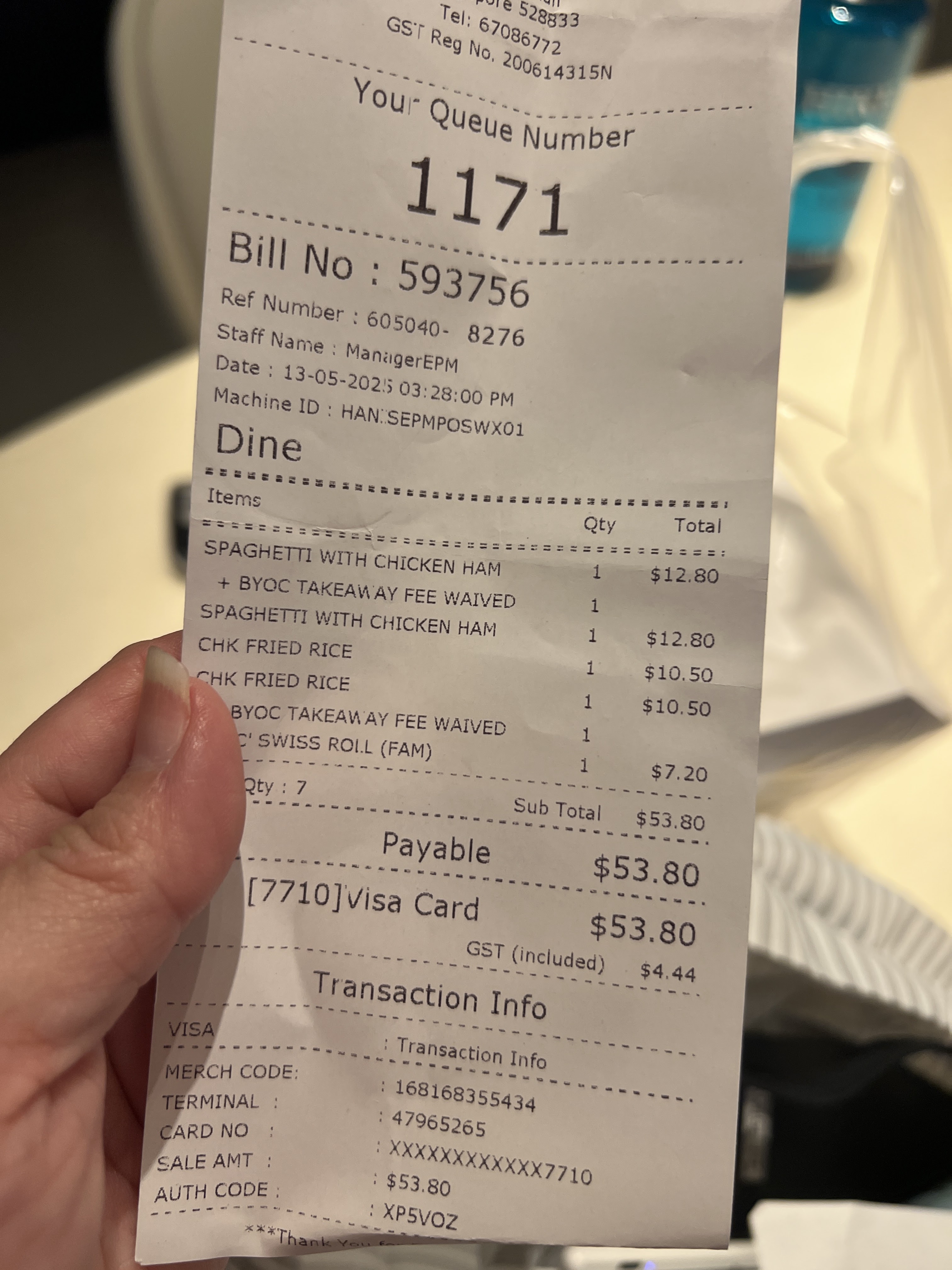
Initially told the girls we’ll go opposite to have lunch but lil’ one who always have cravings asked for McDonalds again. HM’s outlet is closed, the nearest to us now is in Kovan. Haiz! 最讨厌出门! So ordered in.
Forget to take pic of the unhealthy food so take pic of receipt. Haha!
还没吃午餐的时候 I took these out to defrost. Going to marinade the meats and portion them, so can just steam them for lil’ one’s lunch for school and maybe for x3 pax dinner?
Dried scallops rehydrated and perhaps 2 packs of mince pork will be used to cook for Monday’s lunch.
Decided to cook more rice, will steam individually when I need them.
Although I don’t really liked the idea of overnight rice but now I need to keep my sanity
Honey wings. Last 7 pieces for the two of us.
Che-che cooked this for herself
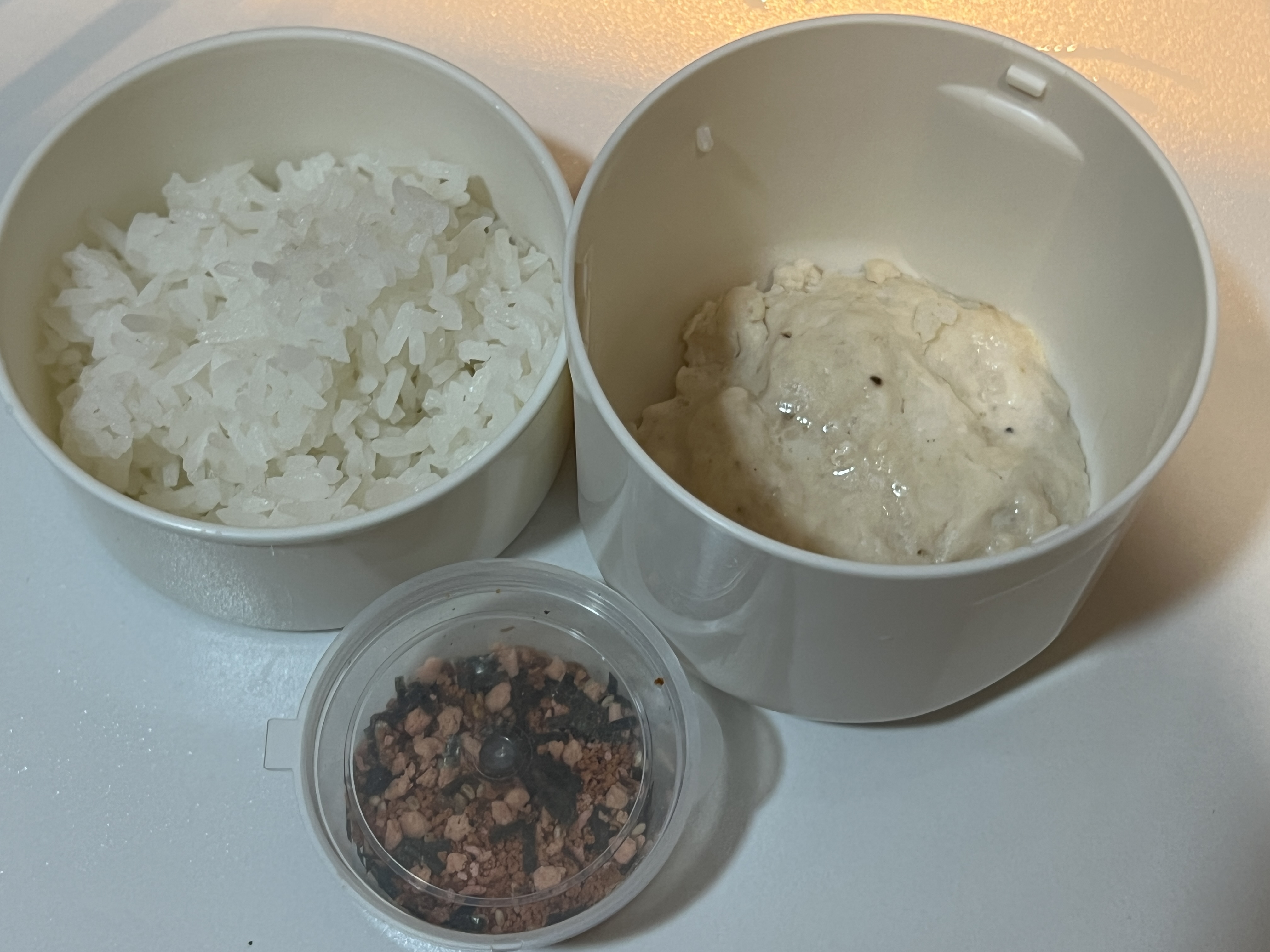
Had this furikake together with the chicken
I began cooking porridge for lil’ one at around 7+. At 8.02p when this photo was taken, the porridge is ready to be transferred to slow cooker. This will be lil’ one’s lunch as I have arranged to meet Susanna. My goodness, our long overdue meetup.
- Marinated the pork with oyster, sesame and a little garlic paste.
- Marinated chicken basil style
By 9.03pm all packed. I think from now on, I should marinate the meats the moment I’m back from supermarket and portioned them out. Think will be tiring on my part everytime I’m back from the supermarket. End of the day whether I do it first or later, I’m the only person doing it. #suffernowenjoylater#
5th May (Mon)
Simple chores then left the house to meet up with Susanna. It has been 9 years since we last met. Met for 5hrs before we parted ways and I went about doing a little grocery shopping. Didn’t cook coz I haven’t even had time to plan the menu 🤣, moreover since I’m out I might as well pack dinner home.
Won’t go wrong with Donki for the girls meal, any meal. As long as it’s japanese
@ 8.43pm. I don’t really like this Sakura brand mince chicken but had no other choice left in the supermarket
@ 9.38pm - all packed and into the freezer
@ 9.59pm after all the 摸来摸去反正有事做, I can finally sit down to start scanning. Yah…now you know why I always have to sleep late. I have this unexplainable behaviour that I’m more productive in the night, or maybe I panicked that I haven’t done anything proper in the day time that I suddenly feel I needed to piah. Maybe that’s where lil’ one get this trait from.
I have some music books which I thought I’ll be playing or Che-che thought she’ll be using but didn’t. Since moving into this house 10 years ago, this is already my third time declutterring stuffs from the bomb shelter.
6th May (Tue)
Another eat-snake day. Haha! Lil’ one’s has school for 5hrs only. Did the eeny meenie mynie mo thingy - go back home to continue scanning OR stay out.
Staying out means either I find a place in Starbucks/Macs and do my holiday itinerary planning and make last 2 hotel bookings OR see 🌷. Tulipmania ends 12th May next Monday!! Oh my!
You might wonder why can’t I go back home and do scanning and holiday planning at the same time since I’ll be on the laptop for both jobs. Coz the scanner is so efficient 👍, I’ll barely have the time to start anything on my planning and gotta go back to the IJ Utility to click scan, at the same time don’t forget I need to move my hand removing and putting new papers. I’m hoping to quickly scan finish the stuffs and then I can have as many tabs in laptop putting everything down. Currently I have the draft in my iPad Notes so need to do the checking through then I can start typing in nicely in Word.
Did the usual vacumn and mopping, hang up laundry where the cleaned clothes stayed overnight in the machine 🤣. Needed to make sure the laundered towels are dried thus turned on the heater for 2hrs last night. This morning all I needed to do was to hang up the laundry and put in one side of the sofa covers for wash.
At 11.15 prepared her lunch
Soaked Jap rice for next day’s both girls lunch. So I can simply turn on the stove, throw in the marinated pork and cook.
Arrived Flower Dome at 1.01pm and left at 1.46pm with another 103 pictures in my camera roll. And I’m happy.
Had my lunch at Uncle wanton. Packed dinner for them and laksa for myself. x2 packs. *wink*
Dropped by Project Açai as was craving it for quite some time.
Decided to narrow down some hotels and then do some comparison between the different 3rd party platform. However there’s no free wifi connection in Project Açai thus it posed a challenge for me. I used my hotspot for a short time
Since I knew approximately when she’ll reach home, I heated up Che-che’s wanton noodle soup. I didn’t take pictures of their food but this piece of paper I found inside the plastic bag 😉 . “Uncle 两包不要菜和什么青色的。”
My dinner. I’m greedy. I love the rojak
@ 9.29pm. Tomorrow’s lunch for the girls is cooked and will be transferred to the slow cooker.
7th May (Wed)
Lunch was easy for che-che and myself
Porridge for her
Laksa for moi, I packed this yesterday
Left home at 3.30 and reached outside school in 18mins. Haiz….. she wasn’t dismissed from class early. Sent her home and honestly I didn’t even feel like leaving the house after that, but we needed to eat.
Dinner - the girls initially wanted to eat at Genki (Thankful Day) but there was a long wait. Suddenly both tagged and joined me for Swensens 🤭
@ 8.49pm - took out the white rice. Ehh….i think I overcooked too much. 300g is too much. If I had cooked dinner at home daily it’d be long gone but …. sanity and balancing myself is important. Mom will nag at me for eating many night overnight rice
8th May (Thu)
What’s with people so grumpy in the morning? Had to pump petrol after dropping lil’ one in school before heading to OTH. I accidentally release the wrong thing - bonnet instead of petrol cover just coz I reached a little too low (without looking) and the other chap came over to my car had to tell me so rudely 开打油盖,你开这个干嘛?Uncle why you so bad mood?
@ 8.27am - arrived OTH a little later than usual as had to pump petrol. The coverted seat is empty but there was a guy behind me if I sat there, I prefer to face the internal wall. He left a short while after that and I switched to my anti-social seat.
Brought my iPad, hoping to get to finalise exactly how many days I need in Stop C. I haven’t booked the hotel yet. 😮 With my AirPods I’m secluded from the world and started playing my relaxing music which made my eyes drowsy 🤣🤣. I took a nap instead of doing what I need to do. Sigh…brought my iPad for nothing.
The music that I played and put me to lala-land. I don't have that many relaxing, spa music in my phone. I have saved alot in my Spotify tho but since there's no wifi I had no access to it.
Packed lunch for mom n che-che who worked from home today. At the same time I packed dinner (Crave’s nasi lemak) for ourselves. Passed mom her lunch and I had to rush back 🏠 to give che-che her lunch during her ‘lunch hour’.
The 4.5hrs at home after that was spent on packing the little groceries into the fridge and marinating mince pork, cleaning the house and scanning music books. The 麻烦 part is always needing to leave the house to pick up that Princess.
Saw this. Not sure how nice it’ll taste
Yay! The 2 empty boxes arrived. I will likely pack the remaining stuffs by Saturday. In the meantime I continued scanning things and did a few more research.
9th May (Fri)
So sleepy coz last night I was so into the holiday planning that I forgot the time. I decided to head home after dropping lil’ one in school. I slept for 2.5hrs to make it a total of 4.5hrs of sleep. Really not good for my body to be sleeping past 11pm. Guess what? The girl has to be dismissed from school an hour early. 🤦🏻♀️
Lunch at Mos Burger before her therapy. I sat in there for another 20mins after she had left to do some housekeeping in phone.
10th May (Sat)
Ordered Grab for lil’ one and my lunch. I hope by next week I can do some cooking, which honestly I think is unlikely looking at the progress of holiday planning.
Che-che met F to see 🌷. I’m itching to go but …I had things to do at home - Project bomb shelter and holiday planning. In the end, I decided to make a trip down. Had dinner at Sushiro, Scarlett and Donki before heading home. Reached home 7+
@ 2.15pm before I zoomed down to GBTB - Cutting the monsteras to put in toilet. Wah! I didn’t know it grew so long, I can have many more monstera babies at home. Sigh… all the plants need some care but I’m just so tired. I need to change the pots to bigger ones esp the small red ones which is growing crazily sideways. I can’t bear to trim them coz they’re the prettiest plants I have in my balcony.
So pretty right? I took this picture few days ago when I was coming home. No wonder my neighbours stop and look at my plant. Actually years ago I suspect my neighbour cut a portion of my plant and pass it to his mom living in the same place as us.
Anyway, I should be thankful that I made our condo with a nice bright red flowers right? Everything in the condo compound is only green in colour.
Come my dear babies, come back into the house with me.
Monstera growing out of the pot, dead adenium which I need to clear the pot. Should I separate the plant, soil and pot or just heck care and dump the whole thing? Will do this another day.
Speaking of which not only all pots need TLC, I need to switch the bigger pots into something smaller so I can get rid of the stone slabs. A lot of housekeeping to be done for the plants alone. Need to change the storage shed too due to wear and tear. Sigh….have plants also so much trouble.
Technically apart from household chores + settling the girls’ meals + chauffeuring duties I have to do now, I need to also :
(1) complete tidying the bomb shelter
(2) change plants pots. Change all the heavy slabs into the white colour thin thin high pot stand. Currently the big plants comes in that porcelain heavy good to ferment stuffs pot that’s why I need to change
(3) major housekeeping the plants
(4) dismantle and change to a new storage in balcony. Old one wear and tear liao.
(5) change the shoe cabinet paper liners which needs changing
(6) clear as much photos I can. No time to do any holiday iMovies but keep whatever photos I need inside phone for that purpose. Need to get more storage space in phone for holiday
13th May (Tue)
I haven’t been sending or picking che-che to/from work and that kinda make me feel lousy as a parent, although I always complain that they are old enough that we shouldn’t be doing this. Actually I’m not the only guilt-stricken parent. Hubby who often complains about our girls are too pampered, also automatically sends her to work in the (most) mornings when I cannot wake up. We’re now left with only one car, so if he/I need to send lil’ one to school there’s no way he/I can send her to work. In conclusion, I feel we’re both very responsible parents who would try to do our utmost best to provide love and pampering for our children.
Rightfully on days I could have picked her up from school but I’ve been too lazy to leave the house the moment I arrive home. Maybe today (13th May) I should make the drive to pick her up. #sunsettingintheeasttoday#
********pause********
* it’s 14th today and I realise I have too many backlogs and too little time to blog. So I shall just post this out and I guess I won’t have time to do anymore blogs regarding this solo-ing.